
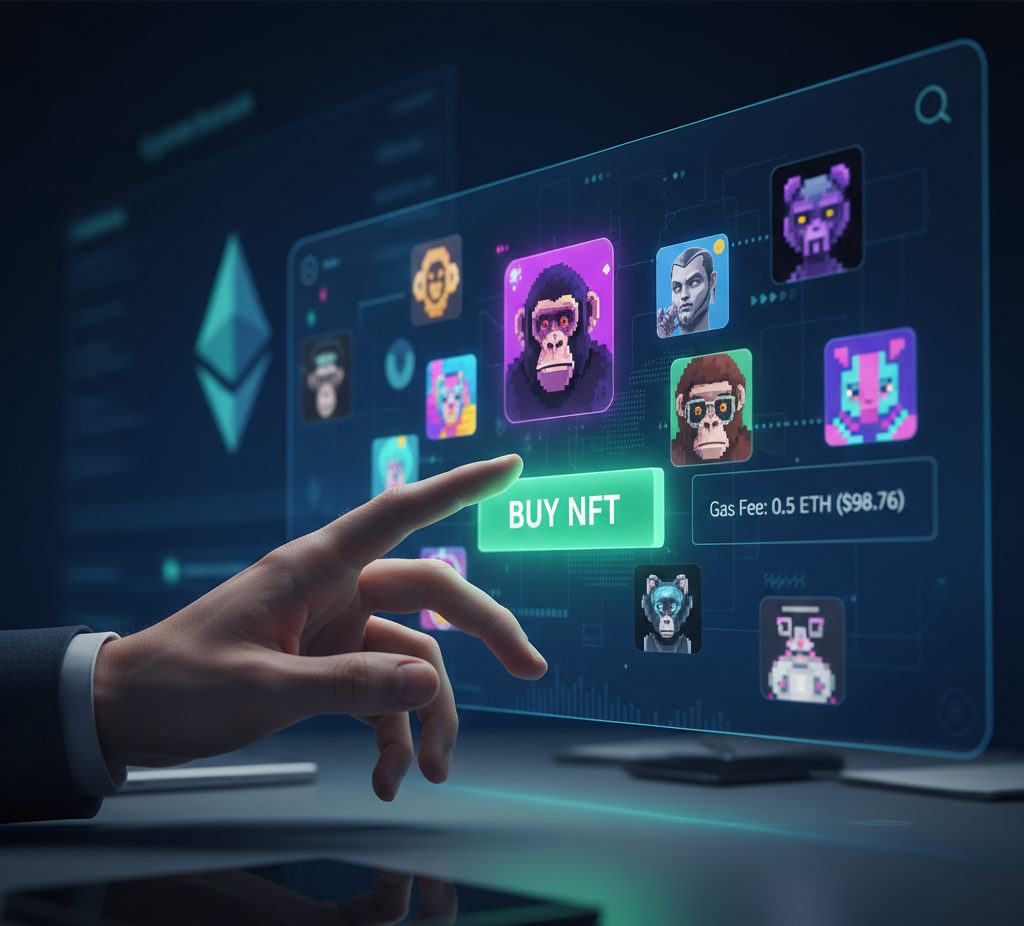
If you’ve typed “what NFT should I buy” into Google recently, you’re not alone.
That question is exploding in the United States right now — and not because NFTs are new again. It’s because people are confused again.
In 2021, people bought NFTs because they didn’t want to miss out.
In 2026, people are searching because they don’t want to make the same mistake twice.
And that’s a very different emotion.
This isn’t a list of “Top 10 NFTs to Buy Now.”
This is the honest guide I wish more beginners read before spending their first $500.
Why This Question Is Exploding in 2026
Search data shows a breakout trend for:
- what nft should i buy
- nft prices
- nft monkey price
- ape nft
- gas fee nft
That tells us something important.
People aren’t just curious.
They’re cautious.
NFT markets didn’t disappear. They matured. The hype cycle cooled. The loud influencers moved on. And now, retail investors are returning more slowly — but more carefully.
The emotional shift matters.
In 2021, the energy was greed.
In 2026, the energy is uncertainty.
And uncertainty makes people search for guidance.
Why Most People Buy NFTs Emotionally (Even in 2026)
Let’s be honest.
Most first NFT purchases are emotional.
Not analytical.
Not strategic.
Emotional.
Here’s what usually drives the decision:
- Fear of missing out (FOMO)
- Seeing someone post profits on X
- A celebrity mention
- A viral meme
- “This one looks cool”
And when the price drops 40% two weeks later, reality hits hard.
NFTs are not stocks.
They are not Bitcoin.
They are digital assets with community, culture, liquidity risk, and sometimes zero exit demand.
When someone asks, “What NFT should I buy?” what they often mean is:
“Which one won’t make me feel stupid later?”
That’s a very human question.
How to Evaluate an NFT Project (Like an Adult, Not a Gambler)
Before buying any NFT in 2026, ask these 6 questions:
1. Is There Real Liquidity?
Check:
- Daily trading volume
- Number of unique holders
- Floor price stability
Low volume = hard to sell.
You don’t make money when you buy.
You make money when you sell.
If there are no buyers, price means nothing.
2. Who Is Behind It?
Is the team:
- Public?
- Anonymous?
- Previously involved in failed projects?
Transparency reduces risk. It doesn’t eliminate it — but it matters.
3. What’s the Utility?
Does the NFT provide:
- Access?
- Revenue sharing?
- Community perks?
- Gaming integration?
- Brand partnerships?
Or is it just art?
Art can hold value. But understand what you’re buying.
4. Is It Cultural or Just Temporary?
Some NFTs survive because they become cultural symbols.
Most don’t.
If the project’s entire value depends on short-term hype, that’s fragile.
5. What Blockchain Is It On?
Ethereum still dominates high-value NFTs.
But newer chains offer cheaper minting and trading.
Lower gas fees can help — but lower fees don’t mean higher value.
6. Can You Afford to Lose 100%?
This is the question nobody likes.
NFTs are high-risk digital assets.
If losing the money would stress you out, you’re not investing — you’re gambling.
But if you’re new, it helps to understand what an NFT actually represents.
Red Flags Beginners Ignore
If you see these, pause.
Promises of guaranteed returns,
Influencer-only marketing,
No clear roadmap,
Sudden price spikes with no news,
Discord hype with no real updates,
Artificial scarcity tactics,
Scams in 2026 are more sophisticated than 2021.
Websites look real.
Roadmaps look polished.
Communities look active.
But exit liquidity disappears just as fast.
The Gas Fee Reality (And Why It Matters More Than You Think)
Many beginners underestimate this.
A $200 NFT can cost:
- $30–$80 in gas fees during high congestion
- Additional marketplace fees
- Royalty fees on resale
Suddenly your $200 purchase is really $260+.
And if the floor drops to $180?
You’re not just down $20.
You’re down much more after fees.
Gas fees are not just technical details.
They directly impact profitability.
Always factor them in before clicking “Buy.”
Why “Cheap NFTs” Are Often the Most Expensive Mistake
Here’s something that feels counterintuitive.
The cheapest NFTs are often the hardest to sell.
Why?
Because:
- Liquidity is thin
- Demand is weak
- Communities fade quickly
- New buyers don’t enter
A $50 NFT with zero buyers is riskier than a $2,000 NFT in an active, liquid ecosystem. Before buying, always check NFT trading volume data to see whether real buyers are active.
Cheap does not mean safe.
Cheap often means illiquid.
And illiquid means stuck.
So… What NFT Should You Buy in 2026?
Here’s the calm answer.
Instead of asking:
“What NFT should I buy?”
Ask:
“What kind of NFT exposure makes sense for my risk tolerance?”
Some people choose:
- Established blue-chip collections
- Gaming NFTs with active user bases
- Utility-driven NFTs
- Small speculative mints (with strict budget limits)
There is no universal “best NFT.”
There is only:
- Your budget
- Your emotional discipline
- Your exit strategy
The smartest beginners in 2026 aren’t chasing the next monkey NFT.
They’re managing risk.
The Emotional Truth Nobody Talks About
NFT volatility is not just financial.
It’s psychological.
Watching your digital asset drop 40% in two days can:
- Affect sleep
- Trigger impulsive selling
- Create regret
- Cause overtrading
If you’re constantly checking floor prices, that’s not investing — that’s stress trading.
And stress is expensive.
Read More : How to Flip NFTs: A Beginner’s Guide Based on What Actually Happens
Final Calm Advice (Without Hype)
If you’re new in 2026:
- Start small.
- Expect volatility.
- Never rely on influencer lists.
- Focus on liquidity and community.
- Factor in gas fees.
- Accept uncertainty.
NFTs are still part of the digital ownership movement.
But they are not magic wealth machines.
The real advantage in 2026 isn’t speed.
It’s patience.
Before you buy, pause and ask:
“Am I buying this because I understand it… or because I’m afraid to miss it?”
That single moment of honesty can save you thousands.
Written by the FinanceBeliever Editorial Team
Covering crypto culture, psychology, and the human side of digital finance — without hype, without promises, and without shortcuts.