Oil prices stalling in global markets as Brent crude and WTI remain range-bound amid easing U.S. strike fears and cautious investor sentiment. After an earlier rally driven by geopolitical tensions, oil prices have lost momentum as traders reassess supply risks, demand outlook, and macroeconomic signals.
oil prices stalling as Brent crude struggles amid easing U.S. strike fears and strong supply outlook
Why Oil Prices Are Stalling Despite Global Uncertainty
Oil markets entered the year with strong bullish expectations, but recent sessions show prices struggling to move decisively higher. Brent crude has repeatedly failed to break above resistance levels, while WTI continues to hover in a narrow trading range. This pause reflects a market caught between fading geopolitical risks and lingering concerns over global demand.
Brent and WTI crude oil prices remain range-bound, highlighting oil prices stalling as easing U.S. strike fears reduce market volatility.
1. Easing U.S. Strike Fears Reduce Risk Premium
One of the biggest reasons oil prices are stalling is the decline in immediate fears of a U.S. military strike. While tensions remain elevated in parts of the Middle East, recent developments suggest a lower probability of direct confrontation involving major oil-producing regions.
As the perceived risk of supply disruption fades, traders have reduced the geopolitical premium previously built into oil prices.
2. Strong Supply Outlook Caps Further Gains
Global oil supply remains ample, with major producers maintaining steady output levels. U.S. crude inventories have shown signs of stability, and OPEC+ has avoided signaling aggressive production cuts in the near term.
This balanced supply picture has made it difficult for oil prices to sustain upward momentum, contributing to oil prices stalling near key resistance zones.
3. Technical Resistance Limits Breakout Attempts
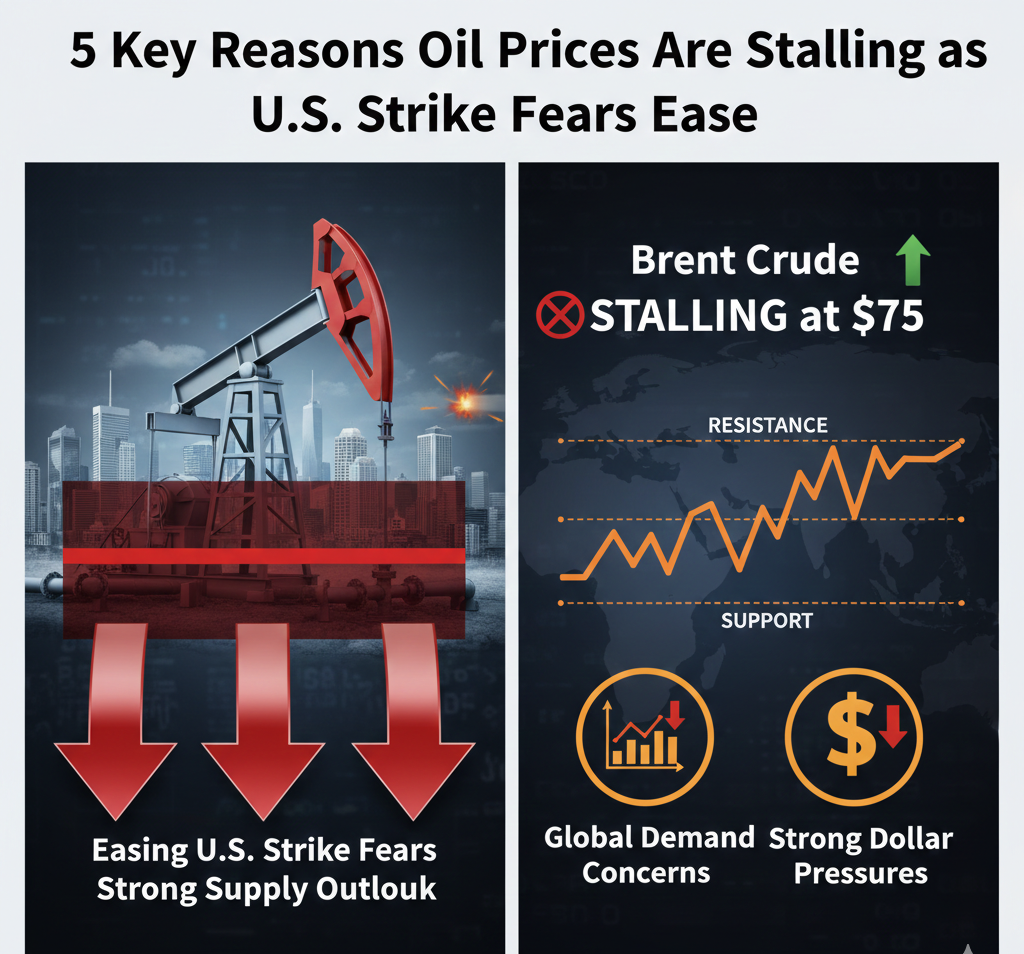
Technical analysis also explains why oil prices are stalling. Brent crude faces strong resistance around recent highs, while support levels remain intact below. As shown in the chart above, prices are consolidating rather than trending decisively.
Brent crude trades between key support and resistance levels, reinforcing signs of oil prices stalling in the absence of a clear market catalyst.
Until oil prices break convincingly above resistance or fall below support, range-bound trading is likely to continue.
4. Global Demand Concerns Weigh on Sentiment
Despite resilient energy consumption in some regions, concerns about slowing economic growth persist. Weak manufacturing data from key economies and cautious consumer spending outlooks have raised questions about future oil demand.
These demand-side worries counterbalance supply risks, reinforcing the trend of oil prices stalling rather than rallying further.
5. Strong Dollar Pressures Commodity Prices
A firm U.S. dollar has also contributed to oil prices stalling. Since crude oil is priced in dollars, a stronger currency makes oil more expensive for buyers using other currencies, often limiting demand.
As long as interest rates remain elevated and the dollar stays strong, upward pressure on oil prices may remain capped.
How Stalling Oil Prices Affect Stocks and Fuel Costs
Oil prices stalling can have mixed effects across financial markets:
Stock markets: Energy stocks may underperform, while transportation and manufacturing sectors benefit from stable fuel costs.
Inflation: Flat oil prices reduce inflationary pressure, easing concerns for central banks.
Consumers: Stable crude prices help prevent sharp increases in gasoline and fuel expenses.
For investors, this environment favors selectivity rather than broad energy-sector bets.
What Investors Should Watch Next
Going forward, oil traders and investors should closely monitor:
Any renewed escalation in geopolitical tensions
OPEC+ production decisions
U.S. inventory data
Global economic indicators affecting demand
Until a clear catalyst emerges, oil prices stalling may remain the dominant theme in energy markets.
Final Thoughts
Oil prices stalling reflects a market in balance—caught between easing geopolitical fears, steady supply, and uncertain demand. While volatility has cooled for now, the situation remains fluid. Any sudden disruption or shift in economic expectations could quickly change the direction of crude prices.
For now, caution and close monitoring remain the best strategies for investors navigating the energy market.