


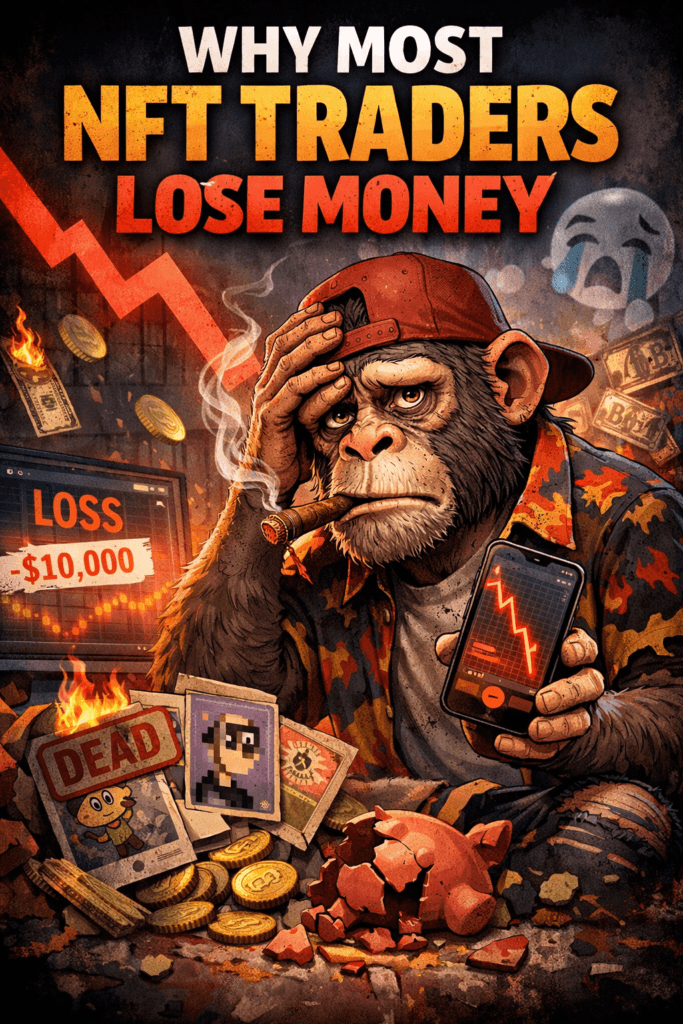
I didn’t lose money because NFTs don’t work.
I lost money because I didn’t understand how they actually work.
At the beginning, I thought flipping NFTs was simple. Buy low, sell high. That’s what everyone says.
But the reality hit fast.
One bad buy turned into two. Then I got stuck holding an NFT no one wanted.
That’s when I realized something important: most NFT traders don’t fail because of bad luck — they fail because of avoidable mistakes.
If you’re getting into NFT flipping in 2026, this guide will show you the exact mistakes that cause losses — and how to avoid them.
If you’re just starting, this beginner guide shows how NFT flipping actually works step by step.
The Reality: Why Most NFT Traders Lose Money
Before we talk about mistakes, understand this:
NFT markets are fast, emotional, and driven by demand—not logic.
That means:
- hype can disappear overnight
- prices can drop instantly
- buyers can vanish without warning
👉 If you don’t understand this, losses are almost guaranteed.
If you’re completely new, this beginner guide explains how NFT flipping actually works step by step.
Before making any trade, it’s important to understand whether NFT flipping is still profitable in 2026 and what affects real returns.
Mistake #1: Buying Based on Hype
This was my biggest mistake.
I saw NFTs trending on social media and assumed demand would continue.
It didn’t.
By the time most beginners see hype, it’s already too late.
👉 Early buyers are selling
👉 You become exit liquidity
Mistake #2: Ignoring Trading Volume
I used to focus on how an NFT looked.
Now I focus on how often it sells.
No volume = no buyers
No buyers = no exit
This one mistake alone traps beginners in losing trades.
Mistake #3: No Exit Strategy
I used to buy first… and think later.
That’s backwards.
Now I decide BEFORE buying:
- Where I’ll sell
- When I’ll exit
- What loss I’ll accept
Without a plan, emotions take over.
Mistake #4: Holding Too Long
This one hurts.
You watch the price drop… and keep waiting.
Hoping it will recover.
Sometimes it doesn’t.
Small losses become big losses because of hesitation.
Mistake #5: Risking Too Much on One Trade
In the beginning, I went too big too fast.
One bad trade affected everything.
Now I keep trades small.
Because in NFT flipping:
👉 survival > quick profit
Mistake #6: Ignoring Market Timing
Timing matters more than being “right.”
You can pick a good NFT…
…and still lose money if you enter too late.
Most beginners chase trends instead of reading them.
Mistake #7: Trusting Influencers Blindly
Not everything you see online is real.
Some influencers promote projects because they’re already in early.
By the time you enter, they’re exiting.
That’s how beginners lose money.
What I Changed (And What Actually Worked)
After making these mistakes, I changed my approach:
- I started small
- I focused on demand, not design
- I watched floor price before buying
- I accepted small losses early
These changes didn’t make me rich—but they stopped me from losing.
Is It Still Possible to Make Money in NFT Trading?
Yes—but not the way most beginners expect.
NFT flipping is not easy money anymore.
It rewards:
- patience
- discipline
- observation
If you treat it like a skill, you improve.
If you treat it like gambling, you lose.
U.S. regulators have warned that crypto and NFT investments carry significant risks, especially for beginners.
Final Thoughts
If there’s one thing I learned, it’s this:
Most NFT losses are preventable.
Not all—but most.
If you avoid the mistakes in this guide, you’re already ahead of most beginners entering the market in 2026.
Frequently Asked Questions
Why do most NFT traders lose money?
Because they follow hype, ignore demand, and don’t plan exits.
Is NFT trading risky?
Yes. Prices are volatile, and not all NFTs have buyers.
Can beginners avoid losses?
Not completely—but they can reduce mistakes with better strategy.
Is NFT flipping still worth it?
It can be, but only with the right approach and expectations.