
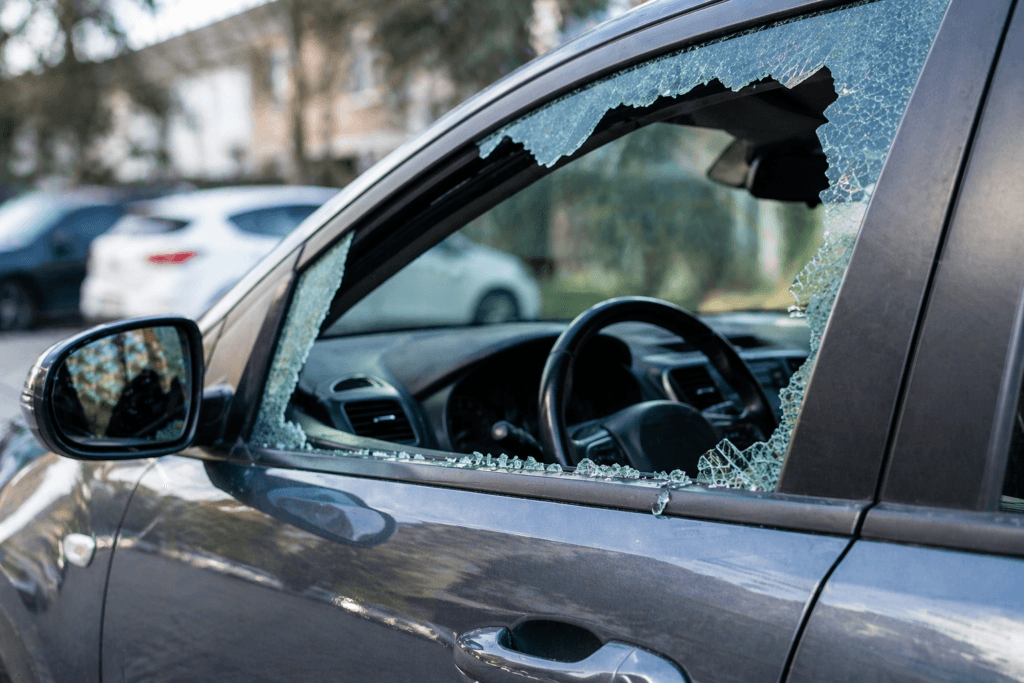
You walk out to your car in the morning and your window is smashed. Your laptop, gym bag, and work bag are gone. The damage and the loss hit you at the same time — and then comes the question every renter eventually asks:
Does my renters insurance cover this?
The answer is yes — but only for part of what happened. And most Americans don’t know exactly which part until it’s too late to do anything about it.
This guide breaks down exactly what renters insurance covers when your car is broken into, what it doesn’t cover, how to file a claim the right way, and how to make sure you’re not left paying out of pocket for something your policy should have handled.
The Short Answer: Yes and No
Here’s the part that confuses most people: renters insurance and car insurance cover different things, even when the incident involves your car.
Renters insurance covers your personal belongings — the stuff that was inside the car when it was broken into. Your auto insurance (specifically, comprehensive coverage) covers the physical damage to the vehicle — the smashed window, the broken lock, the damaged door frame.
So if a thief breaks your car window and steals your laptop and backpack:
- Renters insurance → covers the stolen laptop and backpack
- Auto insurance (comprehensive) → covers the broken window repair
Neither policy alone covers everything. That’s why understanding both matters.
What Renters Insurance Actually Covers After a Car Break-In
Renters insurance includes something called personal property coverage. This protects your belongings — not just inside your apartment, but anywhere in the world, including inside your car.
Items typically covered after a car break-in include:
- Laptops, tablets, and smartphones
- Cameras and electronics
- Clothing and bags
- Sporting equipment
- Cash (usually up to a small limit, often $200)
- Jewelry (often up to a sublimit — check your policy)
The coverage applies whether the theft happened in your building’s parking lot, a public garage, a street parking spot, or even while you were traveling in another state.
While renters insurance can cover personal belongings stolen from your car, understanding different types of coverage is important. For example, policies like Matterport Insurance: How It Works, And Why You Should Use It show how specialized coverage can protect assets in unique situations.
What Renters Insurance Does NOT Cover
There are important exclusions that catch people off guard. Renters insurance will generally not cover:
The car itself. Any physical damage to your vehicle — broken windows, scratched paint, damaged locks — falls under your auto insurance, not renters. If you only have liability coverage on your car (the state minimum), that won’t cover the break-in damage. You need comprehensive coverage for that.
Items used for business. If you had business equipment or client property in your car, some policies exclude or limit coverage for items used professionally.
Losses below your deductible. If your renters insurance has a $500 deductible and the stolen items are only worth $300, filing a claim doesn’t make financial sense — and your insurer won’t pay out anyway.
Expensive items over policy sublimits. Many policies cap coverage for jewelry, watches, and electronics at a specific dollar amount. If your stolen camera was worth $2,000 but your policy has a $1,000 electronics sublimit, you’ll only recover $1,000.
Actual Cash Value vs. Replacement Cost Value — This Matters More Than You Think
When you file a claim for stolen items, the payout depends on whether your policy covers Actual Cash Value (ACV) or Replacement Cost Value (RCV).
Actual Cash Value pays you what the stolen item was worth at the time of the theft — factoring in age and depreciation. That three-year-old laptop might have cost $1,200 new, but ACV might only pay $400.
Replacement Cost Value pays you what it costs to buy a brand-new equivalent item today. That same laptop would be covered at current market price.
RCV policies cost slightly more per month, but if you ever need to file a claim, the difference in payout can be enormous. The Federal Trade Commission recommends reviewing your policy type before signing to avoid surprises at claim time.
How to File a Renters Insurance Claim After a Car Break-In
If your car is broken into, here’s the exact process to maximize your claim:
Step 1: File a police report immediately. This is non-negotiable. Your insurance company will require a police report number to process any theft claim. File it the same day — call your local non-emergency police line or visit the station in person.
Step 2: Document everything that was stolen. Make a list of every item taken, including the brand, model, approximate age, and estimated value. If you have receipts, photos, or serial numbers — even better. Check your email for purchase confirmations if physical receipts are gone.
Step 3: Document the vehicle damage. Take clear photos of the broken window, damaged locks, and any other physical damage to the car. This goes to your auto insurance claim, not your renters claim — but having thorough documentation protects you with both.
Step 4: Contact your renters insurance company. Call the claims number on your policy card or log into your insurer’s app. Report the theft, provide your police report number, and submit your list of stolen items.
Step 5: Contact your auto insurance company. Separately report the vehicle damage to your auto insurer for the broken window and any physical repairs, if you carry comprehensive coverage.
Step 6: Understand your deductible before proceeding. Before you get too far into the claims process, calculate whether your claim is worth filing. If the total stolen value is close to or below your deductible, paying out of pocket may be the smarter move — filing a claim can affect your future premium.
Will Filing a Claim Raise Your Renters Insurance Premium?
Possibly, yes. Insurance companies track claims history, and filing a claim — especially for theft — can result in a higher premium at renewal. Some insurers may also choose not to renew your policy if you file multiple claims in a short period.
This doesn’t mean you shouldn’t file legitimate claims. But it does mean you should weigh the value of the stolen items against your deductible and the potential premium increase before filing. For a $200 loss with a $500 deductible, filing a claim makes no sense. For a $2,000 laptop, it almost certainly does.
What If You Don’t Have Renters Insurance?
If you’re renting and don’t have renters insurance, a car break-in puts you entirely out of pocket for any stolen belongings. The only recovery avenue would be your auto insurance — and only if you carry comprehensive coverage on the vehicle.
Renters insurance is one of the most affordable types of insurance available in the US, typically costing between $15 and $30 per month for solid coverage. For that price, your personal belongings are protected anywhere — in your apartment, in your car, and even while traveling.
If you don’t currently have renters insurance, getting a policy takes about ten minutes online.
Frequently Asked Questions
Does renters insurance cover items stolen from a car parked on the street? Yes. Personal property coverage under renters insurance applies regardless of where the theft occurred — your parking lot, a public street, or a garage.
Does renters insurance cover car theft itself — the whole vehicle? No. If your entire car is stolen, that falls under comprehensive auto insurance, not renters insurance. Renters insurance only covers personal belongings inside the vehicle.
What if I don’t know the exact value of what was stolen? Document what you can remember and gather whatever purchase records you have. Your insurance adjuster can help determine values, but a detailed list from you speeds up the process significantly.
Is there a time limit to file a renters insurance claim? Yes. Most policies require you to report theft within a specific timeframe — often 30 to 60 days. Check your policy documents or call your insurer. Don’t delay.
Can I file claims with both renters insurance and auto insurance? Yes — for different things. Renters insurance covers stolen items. Auto insurance (comprehensive) covers the physical vehicle damage. You can file both claims simultaneously for the same incident.
The Bottom Line
A car break-in is stressful enough without also discovering your insurance doesn’t cover what you thought it did. The key points to remember:
- Renters insurance covers stolen belongings inside your car
- Auto comprehensive coverage covers physical damage to the vehicle
- Know whether your policy pays Actual Cash Value or Replacement Cost Value
- Always file a police report first
- Weigh your deductible against the claim value before filing
Review your renters insurance policy today — specifically the personal property limits, sublimits, and whether you have ACV or RCV coverage. A few minutes now can save you thousands later.
This article is for informational purposes only and does not constitute insurance or legal advice. Coverage varies by policy and insurer. Review your specific policy documents or speak with a licensed insurance agent for guidance on your situation.

Mohammad Javed is the founder and personal finance writer behind FinanceBeliever.com. He holds a Master of Commerce (MCom) degree with a specialization in finance and financial markets. Through years of personal experience studying credit systems, debt management, investment strategies, and how everyday financial decisions impact real households, he built Finance Believer to deliver straight, research-backed financial guidance to American readers. Every article he writes is sourced from authoritative data — including the Federal Reserve, the Consumer Financial Protection Bureau, and the Bureau of Labor Statistics. His work covers credit scores, loans, banking, insurance, investing, and personal budgeting — all written in plain English without the jargon.