
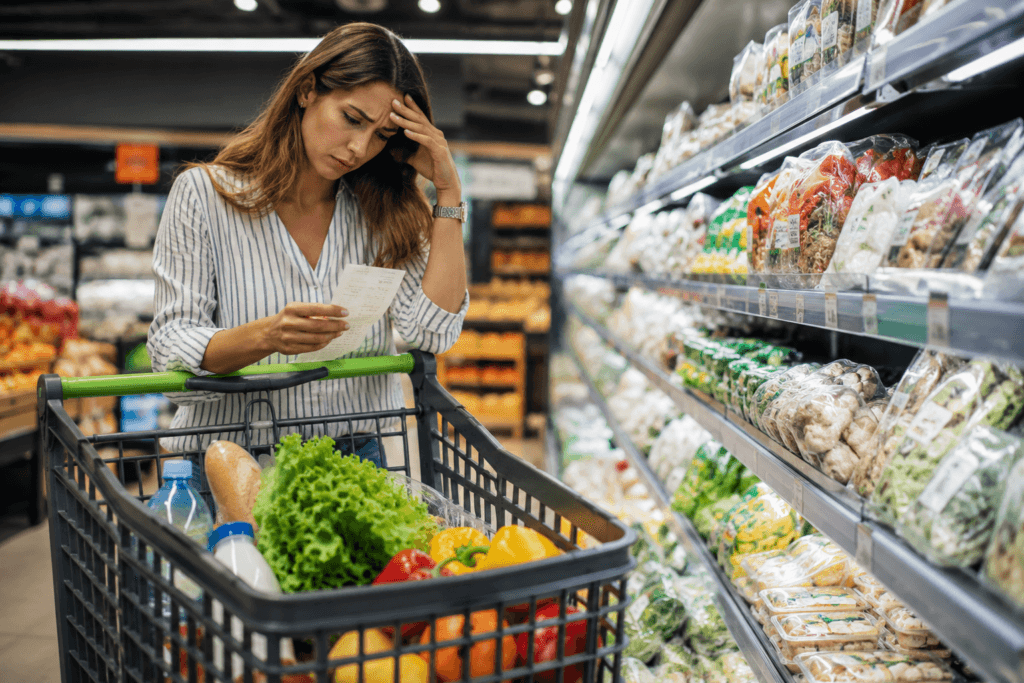
You’ve probably noticed it at checkout. The total keeps climbing even though you bought the same things you always buy. That’s not your imagination — and it’s not just regular inflation.
Trump’s 2026 tariffs are now officially the largest US tax increase as a percentage of GDP since 1993, according to the Tax Foundation. The average American household is absorbing $1,500 in higher costs this year as a direct result. And your grocery bill is one of the most visible places where that pain is landing.
This isn’t a political argument. The data from both sides of the aisle tells the same story: tariffs raise prices for American consumers. Here’s exactly what’s getting more expensive, which categories are hit hardest, and seven practical strategies to protect your budget right now.
The Numbers Every American Shopper Needs to Know
Let’s start with the actual data, because the numbers are more significant than most media coverage suggests.
According to the Tax Foundation’s May 2026 tariff tracker, Trump’s tariffs amount to an average tax increase of $1,500 per US household in 2026 — up from $1,000 per household in 2025. That $1,500 is not a one-time payment. It’s a recurring annual cost embedded in the prices you pay every time you shop, pump gas, or buy clothes.
The Yale Budget Lab, a nonpartisan economic research group, conducted an even more detailed analysis. According to their reporting via Yahoo Finance, the average household may lose up to $4,900 annually due to trade-driven price hikes without changes in shopping habits. Even with adjustments — buying store brands, buying in bulk, switching products — the estimated impact lands around $2,400 per year.
A Council on Foreign Relations poll conducted in January 2026 found that 73% of Americans across political party lines are worried about being able to pay for groceries. That’s not a partisan finding — it’s a household budget finding.
What’s Getting More Expensive — Category by Category
Not all products are affected equally. Here’s the real breakdown of what’s rising fastest and why:
Groceries and Food — Up 1.4% to 2.8%
The Yale Budget Lab estimates that US tariffs are raising food prices by 2.6% overall in the short run. Fresh produce is among the hardest-hit categories — fruits and vegetables imported from Mexico and Canada face new tariffs that are pushing prices up more than 5%, as reported by the Council on Foreign Relations’ April 2026 tariff review.
The specific items feeling the biggest price pressure right now:
Coffee — Brazilian coffee imports now face a 50% US tariff. Coffee prices have surged to record highs in 2026 and show no sign of retreating. If you haven’t noticed your morning coffee costing more, check again.
Fresh produce — Imported fruits and vegetables are up more than 5% since tariffs took effect. Avocados, strawberries, tomatoes, and bell peppers — all heavily imported from Mexico — are among the most affected items.
Sugar and sweets — Sugar prices rose 5.7% year-on-year through January 2026, with a further 6.7% increase projected for the rest of the year. Candy, baked goods, and sweetened beverages are absorbing these increases.
Beef — Domestic beef prices have reached record highs for reasons that combine with tariff-related disruptions to the global meat market.
Clothing — Up 15% or More
According to the Yahoo Finance price comparison report, clothing prices have risen more than 15% overall, with imported items jumping nearly 18% while domestically produced clothing saw a smaller increase of roughly 7%. If you’re shopping for kids’ school clothes, replacing work attire, or simply restocking basics, you’re paying significantly more than you were two years ago.
Home Improvement and Renovation — Up 41% to 49%
This is the category that’s shocking homeowners who planned renovation projects. Carpets and flooring costs have surged dramatically — imported items are up nearly 49% and domestically produced options are climbing about 41%, according to the Pricing Lab Tracker. Kitchen cabinets were hit with a 25% tariff specifically. If you’re planning any home renovation in 2026, you need to factor significantly higher material costs into your budget.
Electronics and Appliances
Products manufactured in China — including electronics, appliances, and tech accessories — face significant additional tariffs. The full effect is still working through supply chains, but consumers shopping for laptops, phones, kitchen appliances, and home electronics are increasingly seeing higher price tags.
Price Impact Summary — 2026 Tariff Effects
| Category | Price Increase | Most Affected Items |
|---|---|---|
| Fresh produce | 5%+ | Avocados, strawberries, tomatoes |
| Groceries overall | 1.4%–2.8% | Coffee, sugar, imported packaged foods |
| Clothing | 15%–18% | Most apparel, especially imports |
| Flooring/carpets | 41%–49% | Imported materials, renovation supplies |
| Kitchen cabinets | 25% | Home renovation materials |
| Household cost (total) | $1,500/year | All categories combined |
Why Are Tariffs Causing Food Prices to Rise?
Understanding the mechanism helps you anticipate what’s coming next.
A tariff is essentially a tax on imported goods — paid by American importers, not by the foreign country selling the goods. When the US places a 25% tariff on Mexican tomatoes, American grocery distributors pay 25% more to import those tomatoes. They then pass that cost to retailers, who pass it to you at checkout.
The confusion many Americans have is that they’re told tariffs protect American jobs. And in some industries, that may be true over the long term. But in the short term — which is the timeline that matters for your grocery bill — tariffs almost always raise prices for American consumers. This is not a disputed economic finding. It’s basic supply chain math.
The additional complexity in 2026 is that tariffs have created uncertainty across the entire supply chain. Businesses that can’t predict future tariff levels are hedging by raising prices preemptively, building buffer inventory, or passing sourcing disruption costs to consumers. The Center for American Progress reported in February 2026 that nearly two-thirds of Americans expressed concern in December 2025 about the impact of tariffs on their finances — and that was before several additional rounds of tariffs took effect in early 2026.
7 Practical Strategies to Protect Your Budget Right Now
The tariff situation is outside your control. Your response to it isn’t. Here’s what actually helps:
1. Buy generic and store brands aggressively. Store brands source domestically or through different supply chains than name brands. On tariff-affected categories like coffee, produce, and packaged goods, switching to the store brand consistently produces 15% to 30% savings. The quality gap between store brands and name brands has narrowed significantly over the past decade.
2. Buy produce in season and source locally. Domestic fruits and vegetables are subject to far lower tariff impacts than imported produce. Shopping at farmers markets, joining a local CSA (Community Supported Agriculture) program, or simply being intentional about which produce you buy based on season and origin can meaningfully reduce your tariff exposure at the grocery store.
3. Stock up on non-perishables now. Canned goods, dry pasta, rice, beans, and other shelf-stable items are subject to ongoing price increases. Buying a 3-to-6-month supply of non-perishables you use regularly — during sales — locks in today’s prices before further increases take effect. This isn’t hoarding. It’s inflation hedging, and financial advisors have been recommending it as a valid personal finance strategy throughout 2026.
4. Audit your grocery budget and set a firm weekly limit. According to financial planning research cited by News Nation’s tariff impact report, households that implement a grocery budget and track spending reduce food costs by an average of 18% compared to unbudgeted shoppers. The tariff environment makes this discipline more important than ever.
5. Cut clothing spending strategically. With clothing prices up 15% to 18%, buying secondhand through ThredUp, Poshmark, Facebook Marketplace, and local thrift stores has become a genuinely smart financial move rather than just a sustainability choice. For kids’ clothing especially — which gets outgrown quickly — the secondhand market offers name-brand items at a fraction of current retail prices.
6. Delay non-essential home renovation projects if possible. With flooring up 49% and kitchen cabinets up 25%, 2026 is arguably the worst time in decades to renovate. If your renovation is discretionary — cosmetic rather than necessary — waiting 12 to 18 months for the tariff environment to clarify could save you tens of thousands of dollars on materials alone.
7. Build or rebuild your emergency fund. The financial uncertainty created by tariff-driven price increases makes an emergency fund more important than ever. Unexpected price spikes — a car repair at tariff-inflated parts prices, a medical expense, a sudden job change — hit harder when your budget is already strained. If your emergency fund isn’t where it needs to be, making that a priority is one of the most protective financial moves you can make in 2026.
If your emergency fund has been depleted by rising costs, our complete guide on why 37% of Americans can’t cover a $400 emergency — and exactly how to build your cushion back gives you a realistic 90-day plan to rebuild it even while prices are climbing.
The Credit Card Trap Hidden Inside the Tariff Crisis
Here’s the pattern that’s emerging across American households in 2026 — and it’s worth naming directly.
Rising grocery prices are pushing more families to carry month-to-month credit card balances. When your grocery bill is $200 higher per month than it was two years ago and your paycheck hasn’t grown proportionally, the difference goes somewhere — and for millions of Americans, it’s going onto a credit card at 22% to 28% APR.
That means tariffs don’t just cost you $1,500 at the grocery store. They potentially cost you significantly more if they’re pushing you into credit card debt. If you’re finding yourself carrying a balance because of rising everyday costs, understanding how to fight back against credit card interest rates over 28% is an essential companion to managing your household budget in this environment.
What Happens Next — The Honest Forecast
The tariff situation in 2026 is genuinely uncertain. The Tax Foundation’s May 2026 analysis notes that the Supreme Court ruled 6-3 in February 2026 that IEEPA does not authorize tariffs, leaving only the new Section 232 tariffs in place. Trump responded by imposing a 10% universal tariff regardless, and the legal battle continues.
What this means practically:
- Prices are unlikely to fall quickly — even if tariffs were removed tomorrow, supply chains and retailer pricing take months to adjust downward.
- Some categories may stabilize — as businesses adapt sourcing strategies and domestic production scales up in certain areas.
- New tariffs could be added — the political and legal environment remains volatile, and additional tariff actions are possible.
The honest financial advice is to plan as if elevated prices are the new normal for at least 12 to 24 months, build your household budget accordingly, reduce discretionary spending in tariff-sensitive categories, and use the emergency fund and debt reduction strategies above to protect your financial foundation.
Frequently Asked Questions
How much are Trump’s tariffs costing the average American household in 2026? According to the Tax Foundation’s May 2026 tariff tracker, Trump’s tariffs amount to an average tax increase of $1,500 per US household in 2026, up from $1,000 in 2025. The Yale Budget Lab estimates the grocery-specific impact could reach $4,900 per year without shopping behavior changes, or approximately $2,400 with adjustments like switching brands and buying in bulk.
Which grocery items are most affected by tariffs in 2026? Fresh produce — especially fruits and vegetables imported from Mexico and Canada — is up more than 5%. Coffee prices have surged to record highs due to a 50% tariff on Brazilian coffee imports. Sugar and sweets are up 5.7% year-on-year with further increases projected. Beef prices have also reached record highs.
Are tariffs permanent? Will grocery prices come back down? The tariff environment in 2026 remains legally contested following a Supreme Court ruling in February 2026. Even if tariffs were reduced, grocery prices typically take 6 to 18 months to meaningfully decrease after import costs fall. Planning for elevated prices through 2027 is the financially prudent approach.
What is the best way to save money on groceries during the tariff era? The most effective strategies are: switching aggressively to store brands (saves 15%–30%), buying produce in season from domestic sources, stocking up on non-perishables during sales, setting a firm weekly grocery budget, and reducing clothing purchases by shopping secondhand.
Do tariffs affect all Americans equally? No. Lower-income households are disproportionately affected because they spend a larger percentage of their income on food and have less flexibility to absorb price increases or substitute products. Families with tighter budgets feel the $1,500 average annual impact more severely than higher-income households.
This article is for informational purposes only and reflects data available as of May 2026. Tariff policies are subject to change. Economic projections are estimates based on current research and may vary.

Mohammad Javed is the founder and personal finance writer behind FinanceBeliever.com. He holds a Master of Commerce (MCom) degree with a specialization in finance and financial markets. Through years of personal experience studying credit systems, debt management, investment strategies, and how everyday financial decisions impact real households, he built Finance Believer to deliver straight, research-backed financial guidance to American readers. Every article he writes is sourced from authoritative data — including the Federal Reserve, the Consumer Financial Protection Bureau, and the Bureau of Labor Statistics. His work covers credit scores, loans, banking, insurance, investing, and personal budgeting — all written in plain English without the jargon.