
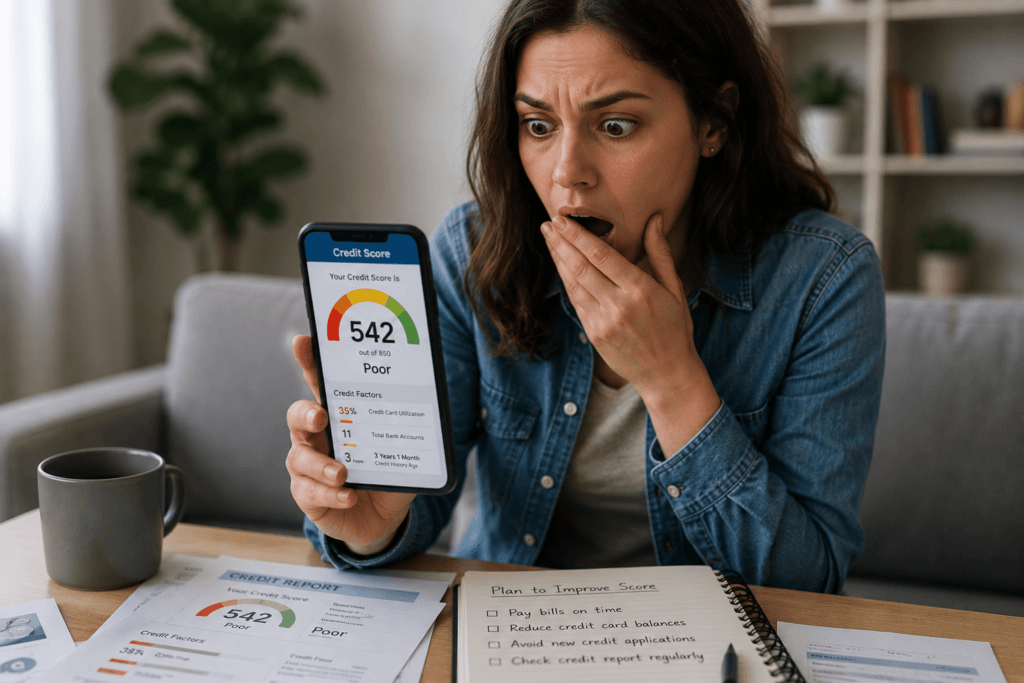
So you made your last payment. Car loan, student loan, personal loan — doesn’t matter which one. You’re done. You log into Credit Karma a few days later expecting to see your score jump, maybe pop the champagne a little early, and instead you see something that makes zero sense: your score actually went down.
You didn’t miss a payment. You didn’t open new credit. You literally paid off a debt. And your score dropped.
This happens to thousands of Americans every month — and almost every single one of them thinks they did something wrong. You didn’t. Here’s exactly what’s going on, why it happens, and what your score will look like once the dust settles.
The Short Answer (Before the Full Explanation)
Paying off a loan can temporarily lower your credit score by anywhere from 5 to 20 points, depending on your overall credit profile. According to Equifax, after you pay off your debt, you may notice a drop to your credit scores because removing the debt affects factors including your credit mix, your credit history length, and your credit utilization ratio.
That drop is almost always temporary. Most people see their score recover — and usually improve beyond the starting point — within two to six months.
The reason it happens comes down to how credit scoring actually works. And once you understand it, it makes complete sense.
How Your Credit Score Is Actually Calculated
Your FICO score — the score that 90% of major lenders use — is calculated from five factors. According to Experian’s breakdown of FICO scoring, payment history carries 35% of your total score, amounts owed carries 30%, length of credit history 15%, credit mix 10%, and new credit 10%.
When you pay off a loan, you directly affect three of those five factors — and not always in the direction you’d expect.
Why Your Score Can Drop After Paying Off a Loan
Reason 1 — Your Credit Mix Gets Thinner
Credit scoring models reward you for managing different types of credit responsibly at the same time. The two main types are:
- Revolving credit — credit cards and lines of credit where your balance fluctuates month to month
- Installment credit — loans with fixed payments over a set term: auto loans, personal loans, student loans, mortgages
When you pay off your only installment loan, you lose that type entirely from your active accounts. According to Lendbuzz’s 2026 auto loan analysis, if your auto loan was your only installment loan, you lose diversity in your credit profile — and scoring models view that as a slight negative because creditors want to see that you can manage different types of debt simultaneously.
It feels backward. But from the scoring model’s perspective, a person actively managing a car loan and two credit cards looks more creditworthy than someone with only credit cards — because the former is demonstrating they can handle multiple debt types at once.
Reason 2 — Your Average Account Age Can Drop
This one catches people completely off guard.
Length of credit history accounts for 15% of your FICO score. Part of that calculation is the average age of all your open accounts. When you close an installment loan account, that account’s age no longer counts toward your average — which can lower it, especially if the paid-off loan was one of your older accounts.
The closed account stays on your credit report for up to 10 years — but once it’s closed, it gradually stops contributing to your average account age calculation as actively as an open account does.
As TateEsq’s student loan analysis explains, credit scoring models weigh the average age of your accounts, and once a loan is paid off and closed, that average age can drop — which may lower your score slightly even when you’ve done everything right.
Reason 3 — A Positive Account Goes From Active to Closed
There’s a subtle but real difference between an open account in good standing and a closed account in good standing. Active accounts with consistent on-time payment history carry more scoring weight than closed ones. The moment your loan closes, that stream of positive payment data effectively stops flowing into your score the same way.
This doesn’t mean the history disappears — it stays on your report for years. But an active account with on-time payments month after month is essentially a continuous stream of positive information feeding into your score. A closed account is a snapshot of the past.
Does It Happen With Every Type of Loan?
Not always — and the size of the drop depends a lot on your overall credit picture. Here’s how it breaks down by loan type:
Car Loan
According to Capital One’s personal loan analysis, paying off an installment loan entirely can affect your credit score because of factors like your total debt, credit mix, and payment history — and the impact is usually minor and temporary. If your car loan was your only installment account, the credit mix hit is more noticeable. If you also have a mortgage or student loan active, the impact is minimal.
Student Loan
Student loans being paid off can cause a slightly larger dip than most people expect — especially for borrowers in their 20s who may have a shorter credit history overall. The account closing affects both credit mix and average account age at the same time.
Personal Loan
Same principle as a car loan. The impact is smaller if you have other types of active credit. The impact is larger if the personal loan was your only installment account.
Mortgage
TransUnion’s 2026 mortgage payoff guide explains that paying off your mortgage is a major achievement, but when that account closes, your credit mix shifts because you no longer carry that installment loan — and your average account age may also decrease, causing a temporary dip that’s usually outweighed by the benefits of being debt-free. For most homeowners, the score drop after paying off a mortgage is small and short-lived.
Credit Card (Revolving Debt)
This works differently. Paying down a credit card balance without closing the account almost always helps your score because it lowers your credit utilization ratio. The key distinction: pay it down, but don’t close it. Closing a credit card account reduces your available credit, increases your utilization on remaining cards, and can lower your average account age — all at once.
How Much Will Your Score Actually Drop?
According to SoFi’s 2026 debt payoff analysis, paying off debt can either raise or lower your credit score depending on how it affects credit utilization, account age, and credit mix. For most people, a typical score drop after paying off an installment loan runs between 5 and 20 points.
The drop tends to be larger if:
- The paid-off loan was your only installment account
- You have a short credit history overall (under 5 years)
- Your remaining accounts are all the same type (all credit cards, for example)
The drop tends to be smaller if:
- You have multiple types of active credit remaining
- Your credit history is long and established
- Your payment history on the closed loan was perfect
The Good News: It Comes Back — Usually Stronger
Here’s what actually matters. That temporary dip is not the end of the story.
According to Credible’s February 2026 loan payoff guide, your credit score can take an initial hit but recover over time — and the long-term effect of consistently paying loans on time and eliminating debt is positive for your overall credit health.
What happens in the months after payoff:
- Month 1–2: Small dip as the account closes and scoring factors recalibrate
- Month 3–4: Score stabilizes as lenders and bureaus process the final status
- Month 6+: Score typically recovers and often improves beyond its pre-payoff level — especially if you continue making on-time payments on remaining accounts
The closed account stays on your report in good standing for up to 10 years. All those on-time payments you made while the loan was open continue working in your favor long after the final payment clears.
The net result of paying off a loan responsibly is almost always positive for your credit, your finances, and your peace of mind — even if the score blips downward in the first few weeks.
How to Minimize the Score Drop When Paying Off a Loan
You can’t fully prevent a temporary dip, but you can keep it as small as possible.
Keep your other accounts open and active. The more types of credit you maintain after the loan closes, the less impact the credit mix change has. If you have credit cards, keep using them lightly and paying them in full — this keeps those accounts reporting as active.
Don’t open new credit right before paying off a loan. New credit inquiries and new accounts both temporarily lower your score on their own. Stacking them with a loan payoff amplifies the dip unnecessarily.
Don’t close any credit card accounts at the same time. Closing a credit card right after paying off a loan hits your score from two directions simultaneously — credit mix and available credit utilization both take hits at once.
Time it away from major financial applications. If you’re planning to apply for a mortgage or car loan in the next 60 days, be aware that paying off an existing loan right before that application could cause a short-term score dip that affects your rate. Not a reason to delay payoff — just something to be aware of.
What This Means for Your Overall Credit Strategy
The honest answer to “will paying off my loan hurt my credit score?” is: maybe, slightly, temporarily. And it almost never matters in the long run.
A 10-point drop that recovers in three months is not a reason to keep paying interest on a loan you can afford to close. The money you save in interest is real. The score dip is temporary. The math is not close.
What does matter long-term for your credit is the same thing that’s always mattered — paying every account on time, keeping credit card balances low, and building a long, clean payment history across multiple account types.
And if you’re paying off loans as part of a bigger debt elimination plan, our detailed breakdown of how fighting back against credit card rates above 28% APR works — including balance transfer cards, credit union rates, and the one phone call most Americans never make — shows you the fastest way to eliminate the debt that costs you the most.
Pay off the loan. Watch the score dip slightly. Then watch it recover. That’s how this works — and it’s exactly what’s supposed to happen.
FAQ
Q1: Will my credit score go up after paying off a car loan? A1: It might go up, or it might dip slightly first — then go up. Paying off a car loan often causes a temporary 5 to 15 point drop because it closes an active installment account and can reduce your credit mix. Most borrowers see their score recover and improve beyond the starting point within two to six months, especially if they continue making on-time payments on remaining accounts.
Q2: Why did my credit score drop after paying off a loan? A2: When you close a loan account, three scoring factors can shift: your credit mix loses an installment account type, your average account age may decrease as the closed account stops contributing actively, and a positive open account converts to a closed one. Each of these can cause a small, temporary dip. It does not mean you did anything wrong.
Q3: How long does it take for credit score to recover after paying off a loan? A3: Most people see their credit score recover within two to six months after paying off a loan. The recovery is faster if you have other types of active credit and a long credit history overall. The closed loan account remains on your credit report in good standing for up to 10 years, continuing to positively influence your score during that time.
Q4: Does paying off a loan early hurt your credit score more than paying it on time? A4: Paying off a loan early has essentially the same effect as paying it off on the final scheduled payment — the account closes, and the same credit mix and account age factors apply. The more significant consideration for early payoff is checking whether your lender charges a prepayment penalty before sending that final payment.
Q5: Should I keep a loan open to protect my credit score? A5: No. Keeping a loan open purely to protect your credit score rarely makes financial sense. The interest you pay to keep an account open almost always costs more than the temporary score dip is worth. Pay off the loan, accept the small temporary drop, and let your score recover naturally while you benefit from being debt-free.
DISCLAIMER
This article is for educational purposes only and does not constitute financial or credit counseling advice. Credit score impacts vary based on individual credit profiles. FICO scoring models are owned by Fair Isaac Corporation and may change over time.

Mohammad Javed is the founder and personal finance writer behind FinanceBeliever.com. He holds a Master of Commerce (MCom) degree with a specialization in finance and financial markets. Through years of personal experience studying credit systems, debt management, investment strategies, and how everyday financial decisions impact real households, he built Finance Believer to deliver straight, research-backed financial guidance to American readers. Every article he writes is sourced from authoritative data — including the Federal Reserve, the Consumer Financial Protection Bureau, and the Bureau of Labor Statistics. His work covers credit scores, loans, banking, insurance, investing, and personal budgeting — all written in plain English without the jargon.